 by
by Introduction: What Is a Busy Board?
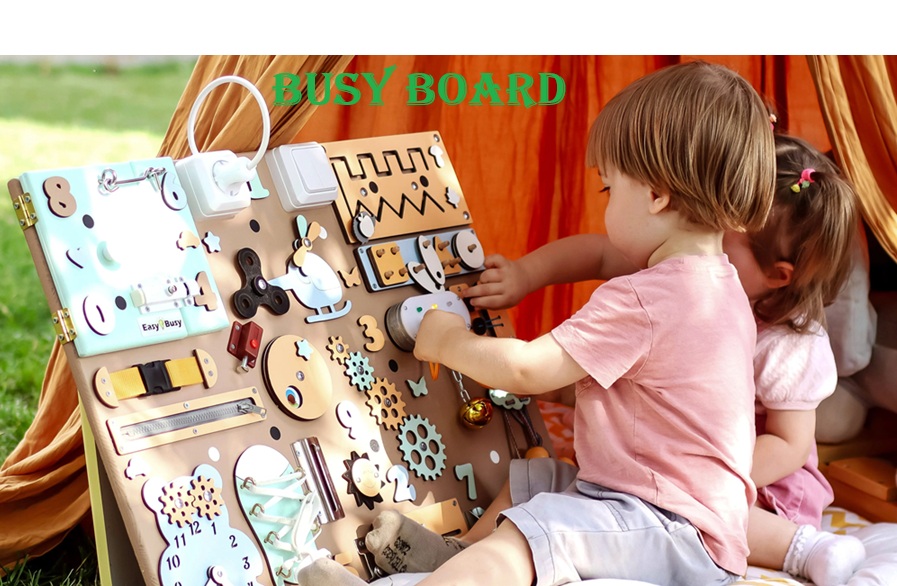
A busy board is an interactive mastering tool designed entirely for toddlers and extra youthful children to discover, touch, control, and check with regular objects in a steady and attractive manner. Rooted in Montessori education standards, busy forums inspire fingers-on getting to know, independence, problem-fixing, and quality motor potential development.
In recent times, with displays dominating worldwide, parents and educators are constantly looking for big, screen-unfastened sports that help cognitive and physical improvement. Busy forums stand out as an easy yet powerful educational toy that keeps kids engaged even as it nurtures important lifestyle competencies.
What Is a Busy Board?
A busy board is a flat board or panel full of numerous interactive objects together with switches, locks, zippers, buttons, gears, latches, and textures. These objects mimic real-world gear and circles of relatives’ devices, allowing kids to exercise everyday moves successfully.
Key Characteristics of a Busy Board:
- Hands-on and interactive
- Inspired via Montessori mastering
- Designed for impartial play
- Encourages interest and exploration
- Suitable for infants and preschoolers
Busy forums may be wood, material-based, totally definite, wall-established, or portable, relying on the kid’s age and surroundings.
History and Montessori Philosophy Behind Busy Boards
Busy boards are deeply encouraged through Dr. Maria Montessori, an Italian physician and educator who believed kids learn notably through self-directed hobbies and hands-on exploration.
Montessori Principles Applied to Busy Boards:
- Independence: Children explore at their non-public pace
- Real-Life Skills: Use of practical, normal gadgets
- Freedom Within Limits: Safe surroundings for exploration
- Sensory Learning: Learning via touch and movement
Busy boards align perfectly with Montessori’s perception that children are certainly curious novices who thrive on the same time as given practical gear.
Why Busy Boards Are Important for Child Development
Busy forums are not in reality toys—they’ll be developmental equipment. They assist multiple areas of boom simultaneously, making them relatively precious in early youngsters’ schooling.
Developmental Areas Supported:
- Physical improvement
- Cognitive improvement
- Emotional regulation
- Sensory processing
- Hand-eye coordination
In a single hobby, a little one may additionally twist, pull, help, push, and examine—appealing to all people and minds.
Key Benefits of a Busy Board
Major Benefits at a Glance
| Benefit | Description |
|---|---|
| Fine motor skills | Strengthens finger and hand muscles |
| Cognitive growth | Improves memory and logic |
| Problem-solving | Encourages trial and error |
| Focus & patience | Enhances attention span |
| Independence | Builds self-confidence |
| Sensory stimulation | Engages multiple senses |
| Screen-free learning | Reduces screen dependency |
Busy Board vs Traditional Toys
| Feature | Busy Board | Traditional Toys |
|---|---|---|
| Learning approach | Hands-on & experiential | Often passive |
| Skill development | Multiple skills at once | Usually single-skill |
| Screen-free | Yes | Not always |
| Montessori aligned | Yes | Rarely |
| Longevity | Grows with child | Short-term use |
Busy boards provide open-ended play, no longer like many toys, which have the simplest one feature.
Types of Busy Boards
1. Wooden Busy Boards
- Durable and inexperienced
- Ideal for infants
- Strong Montessori alignment
2. Fabric Busy Boards
- Soft and lightweight
- Ideal for toddlers and adventure
- Safe for early exploration
3. Wall-Mounted Busy Boards
- Perfect for playrooms and lecture rooms
- Encourages reputation and motion
4. Travel Busy Boards
- Compact and portable
- Keeps children engaged on the pass
Age-Wise Busy Board Activities
| Age Group | Suitable Activities |
|---|---|
| 6–12 months | Textures, mirrors, soft flaps |
| 1–2 years | Buttons, Velcro, zippers |
| 2–3 years | Latches, locks, gears |
| 3–5 years | Numbers, letters, clocks |
Busy Board Components Explained
Common objects determined on a hectic board embody:
- Light switches
- Door latches
- Shoelaces
- Velcro strips
- Gears and wheels
- Buckles and snaps
- Shapes and puzzles
Each element has a specific motor or cognitive potential.
How Busy Boards Support Early Learning
Busy forums introduce kids to:
- Cause and effect
- Logical sequencing
- Spatial hobby
- Early math and language ideas
They prepare babies for actual-existence duties like dressing, setting up doorways, and organizing gadgets.
Sensory Development Through Busy Boards
Sensory play is essential in early adolescence. Busy forums stimulate:
- Touch (textures)
- Sight (shades, movement)
- Sound (bells, clicks)
This sensory center allows enhanced neural connections inside the mind.
Fine Motor Skill Development
Fine motor abilities incorporate small muscle actions. Busy boards enhance:
- Pincer draw close to
- Finger dexterity
- Hand electricity
- Wrist manipulation
These skills are crucial for writing, consuming, and self-care.
Cognitive and Problem-Solving Benefits
Busy boards inspire kids to:
- Experiment
- Predict effects
- Learn from errors
- Build logical questioning
Every latch opened is a mini trouble solved.
Emotional and Social Growth
Busy boards help children:
- Build staying power
- Increase popularity
- Gain self-perception.
- Experience achievement
When utilized in corporate settings, similarly, they encourage sharing and cooperation.
Busy Boards for Special Needs Children
Busy boards are highly powerful for youngsters with:
- Autism Spectrum Disorder (ASD)
- ADHD
- Sensory processing traumatic conditions
They offer setup but bendy mastering, supporting youngsters to modify emotions and beautify motor control.
How to Choose the Right Busy Board
Checklist:
Age-appropriate design
Smooth, non-poisonous materials
Secure attachments
Variety of sports
Easy to easy
Safety Guidelines for Busy Boards
| Safety Tip | Why It Matters |
|---|---|
| Avoid small parts | Prevent choking |
| Smooth edges | Prevent injuries |
| Strong attachments | Avoid breakage |
| Adult supervision | Ensures safe play |
DIY Busy Board: Step-through-Step Guide
Materials Needed:
- Wooden board
- Household devices
- Screws and glue
- Sandpaper
- Non-toxic paint
Steps:
- Sand the board
- Plan format
- Attach additives
- Test stability
- Supervise first use
DIY busy boards are cost-effective and customizable.
Busy Board Ideas for Different Ages
- Toddlers: Zippers, buckles
- Preschoolers: Numbers, shapes
- Older children: Clocks, puzzles
Busy Board for Home, Travel, and Classrooms
Busy boards are bendy:
- Home: Independent play
- Travel: Quiet entertainment
- Classroom: Skill stations
Maintenance and Cleaning Tips
- Wipe weekly with mild cleansing cleaning soap
- Check screws frequently
- Replace worn factors
- Store in dry location
Common Mistakes to Avoid
Too many gadgets
Unsafe substances
Lack of supervision
Age—beside the point capabilities
Frequently Asked Questions
Is a busy board steady for infants?
Yes, whilst age-suitable and supervised.
At what age can a child use a busy board?
From as early as 6 months.
Are busy boards educational?
Absolutely—they aid more than one mastering domain names.
Final Thoughts
A busy board is greater than a toy—it’s a funding for your little one’s improvement. By combining play with purpose, busy forums nurture interest, independence, and critical lifestyle talents in a stable, attractive, and Montessori-approved way.
Disclaimer
The information provided in this article is for general educational and informational purposes only. It is not intended as professional advice. Always supervise children during play and consult child development or safety professionals before introducing new educational toys or activities.